Budget 2025: How Reeves’ ‘Just Keeping the Lights on’ budget harms contractors

Image
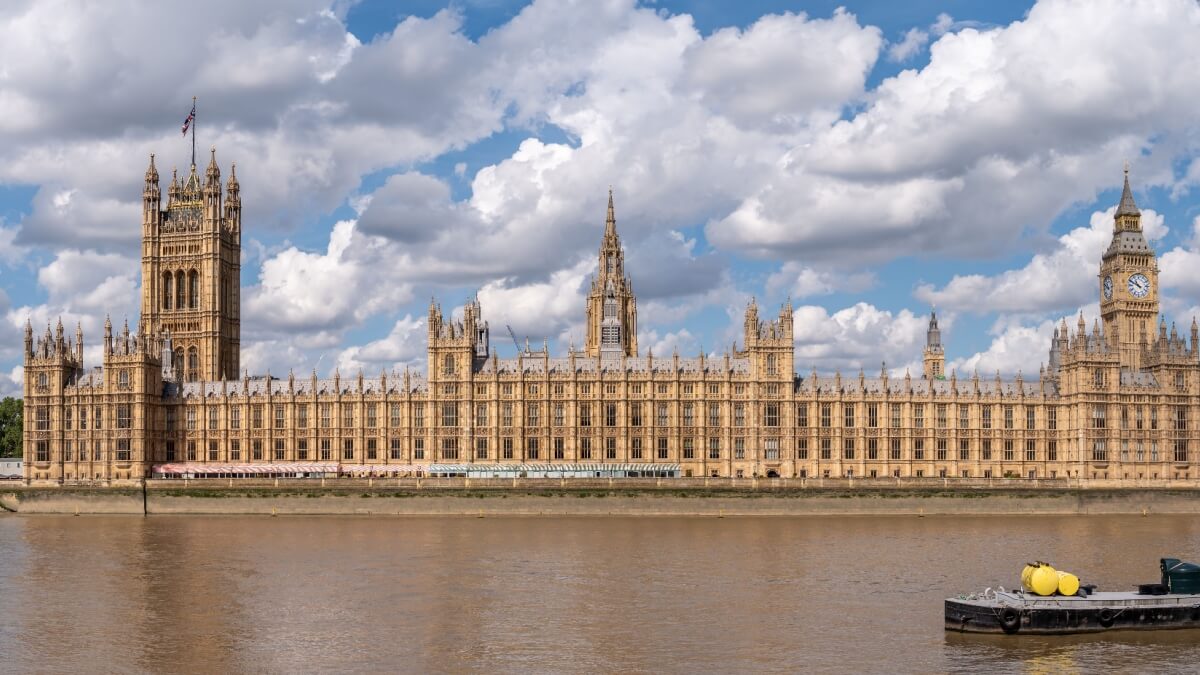
Houses of Parliament
Budget 2025 By Photo: JeffWhyte/Shutterstock

The chancellor hits UK contracting with a 'growth-choking' budget, containing two IR35 'devils in the detail' and Labour's 'hidden' penalisation of remote work.

Table of Contents

UK contractors look at risk from two IR35 'devils in the detail' of Rachel Reeves' Budget 2025 delivered yesterday, Wednesday, November 26th.

The devilish pair are in addition to the chancellor's second budget also containing a "hidden" penalisation of remote work by Labour.

Budget 2025 raises £13.9billion in extra tax in three fell swoops

Both the 'devils' and the 'hidden' attack were detected yesterday after HM Treasury's boss unveiled:

  • An £8billion income tax threshold freeze
  • A £4.7billion salary sacrifice raid, and,
  • A £1.2billion dividend tax hike.

They were detected by some of the 15 expert advisers to contractors who spoke with ContractorUK after Reeves's budget, which was mistakenly leaked by the OBR 30 minutes before its official launch in the House of Commons.

The Office of Budget Responsibility (OBR) has since apologised for what it called a "technical error."

Much of Budget 2025 is relevant to contractors

Citing the budget containing a hefty £26billion in tax rises, the adviser behind the "hidden" remark (who declined to be named) also said the OBR's figures alone prove that "there's much in Budget 2025 that's relevant to contractors."

In fact, although they won't just hit contractors, the income tax threshold freeze until 2031, the 2029 salary-sacrifice raid, and the 2026 dividend hike collectively account for more than half (£13.9bn) of the budget's £26bn total tax increases.

Even if unaffected, contractors should still dislike the budget's anti-WFH measure

"There's also much in Budget 2025 that perhaps isn't relevant to contractors," the adviser speaking on condition of anonymity continued.

"But your atypical work audience should still be unhappy about what Labour is doing, such as what's hidden here."

Block on tax relief for unreimbursed work-from-home expenses

Pointing to Budget 2025 ch4.192, the adviser quoted the government saying it will remove tax relief for unreimbursed work-from-home expenses.

The government has offered no reason for the removal.

Effective from 2026-27, the removal means employers can still reimburse employees for such WFH costs where eligible, albeit without deducting income tax and NICs.

The adviser's characterisation of the removal to ContractorUK as "hidden" seems fair, given that Reeves left it out of her Budget speech.

Before an outline (below) of other items in the budget omitted from parliament — chiefly the two IR35 'devils in the detail' — detected by Re Legal Consulting, and Qdos (with supporting insight by Osborne Clarke), here are the budget's thirteen top measures for contractors.

Budget 2025 Key Measures: Top 13 — Unlucky for Some

(The numbers listed here correspond to expert commentary in the sections below)

  1. A freeze in both the income tax and employer NICs thresholds.
  2. Increasing the tax rates on dividends (from April 2026), property and savings income (from April 2027) by 2% points.
  3. HMRC to collect £2.1bn a year thanks to the 2% points increase across the three areas.
  4. OBR have factored into the £2.1bn "behavioural impact of individuals reducing their taxable dividend income in response to the measure, which is more than offset by a reduced incentive to incorporate".
  5. Both employer and employee National Insurance Contributions to be charged on salary-sacrificed pension contributions beyond a new £2,000 threshold.
  6. Joint and Several tax Liability for the clients of umbrella companies from April 2026. (See a new HMRC policy paper published alongside the budget.)
  7. New settlement terms for Loan Charge contractors.
  8. New HMRC powers to target tax avoidance scheme promoters; a reward scheme for HMRC informants, and a framework for reporting deliberate tax cheats.
  9. New "Hidden Economy" team to be set up within the Fair Work Agency (FWA).
  10. New mileage-based charge on plug-in hybrid and electric cars from April 2028, levied at 3p per mile, and increasing annually with CPI.
  11. Changes to both tax credits for small business investors and capital gains tax relief for employee ownership of small businesses.
  12. Changes to the Company Directors Disqualification Act to extend the circumstances in which directors who break the law can be disqualified.
  13. Set a new annual £2,500 charge on £2m properties, rising to £7,500 for £5m-plus properties (the previously trailed 'Mansion Tax').

What IR35 'devils in the detail' are at Budget 2025?

Despite Chart Accountancy using ContractorUK to appeal to the chancellor to axe IR35 reform, Reeves yesterday made no mention of the Off-Payroll Working (OPW) rules.

But perhaps the chancellor's 'Red Book' did, in its small print, according to an OPW adviser to end-hirers, Re Legal Consulting's Rebecca Seeley Harris.

She told ContractorUK: "I wasn't expecting anything positive in Budget 2025 for the self-employed or Personal Service Companies (PSCs), so personally, I wasn't disappointed.

"But there are a couple of points that [were buried]…in the 150-page budget report [and] one…[of them] is that 'image rights' will be treated as employment income from April 2027.

"This is presumably a response [by HM Treasury] to the IR35 case of former footballer Bryan Robson v HMRC."

All image rights payments related to employment to be taxable employment income

At Budget 2025 ch4.140, the government states — again with no explanation or rationale:

"The government will legislate to clarify the tax treatment of image rights to ensure that all image rights payments related to an employment are treated as taxable employment income and subject to income tax, and employer and employee National Insurance contributions.

"This will be legislated for in Finance Bill 2026-27 and take effect from 6 April 2027."

The government using an equivocal IR35 case outcome to prohibit future wrangles over image rights by decreeing such rights as always taxable, constitutes the first IR35 'devil' in the budget's detail.

Where is the employment status consultation?

Nicole Slowey, operations director at Qdos, detected the second.

Speaking an hour after the (official) publication of the budget yesterday afternoon, Ms Slowey asked: "Am I the only one still looking for info on the employment status consultation?

"In years gone by, consultations have been announced right after the budget.

"It's been promised by the end of this year…[so, I just suppose we now have to] hope it lands soon".

Decision-makers take annual leave in December

The government promised in August 2025 to run the employment status consultation before 2026.

But officials appear to be leaving the last few days of November, or the festive month of December (when "decision-makers are on annual leave"), to launch a consultation into one of the most complex, unwieldy, unresolved areas of working in the UK.

At the same time, ContractorUK understands that HMRC is on the cusp of launching its first IR35 off-payroll working tax investigations in the private sector.

First signs of private sector OPW enforcement from HMRC

Following yesterday's Budget 2025, Frances Lewis, senior consultant at Osborne Clarke told ContractorUK: "We are already seeing increased HMRC activity against umbrella companies — and the first signs of IR35 enforcement.

"The timing of these signs of IR35 enforcement suggests that Off-Payroll Working assessments relating to the first tax year under the OPW in the private sector are likely before next April."

Labour not publishing its employment status consultation conventionally (at a Budget), but instead leaving it to the last month of the year (a holiday month), while HMRC moves to investigate (in the private sector but under a framework which has cost public sector hirers almost £300million), is the budget's second IR35 'devil.'

Budget 2025 Key Measures: Unpacking the Unlucky 13

1. A freeze in both the income tax and employer NICs thresholds

Thanks to the OBR mistakenly publishing "OBR Economic & Fiscal – November 2025" a few hours too early, contractors' tax advisers received advance warning of:

"A set of personal tax changes which increase receipts by £14.9 billion in 2029-30, including freezing personal tax and employer National Insurance contributions (NICs) thresholds for three years from 2028-29, which raises £8.0 billion." [p56]

Reeves later confirmed, including at a press conference at a hospital, that in the shape of the extended income tax threshold freeze, she's "asking everyone to make a contribution."

A tax rise in all but name

The Institute of Fiscal Studies (IFS) isn't fooled by the chancellor's innocuous-sounding ask.

The IFS says that because the frozen threshold extensions include national insurance, the chancellor's move "breaches the government's manifesto tax promise not to increase National Insurance".

"Extending the freeze on personal tax thresholds is a tax rise in all but name," agrees Qdos CEO Seb Maley.

"Millions will be dragged into higher tax bands as a direct result. This sleight of hand from the government will eat into the take-home pay of people just as much as a literal tax rise — whether you're working as an employee, a temp or a sole trader."

The Silent Tax Riser

Those working as contractors, as many of the job candidates do who Leap29's head of tech recruitment Ben Quinn places, will be impacted too.

In a list of "challenges and opportunities" that Mr Quinn says Autumn Budget 2025 presents IT contractors, he ranked the income tax threshold freeze as the first of the challenges.

The technology recruiter told ContractorUK: "With income tax and National Insurance thresholds frozen, many mid-level professionals may face higher effective taxation, potentially influencing career moves and pay negotiations."

Umbrella company Parasol called the frozen thresholds (including on employer NICs) "The Silent Tax Riser."

In an analysis he sent to ContractorUK, Parasol's head of compliance Chris Bloor wrote:

From April 2028 to April 2031:

  • Personal Allowance: £12,570
  • Higher Rate Threshold: £50,270
  • Additional Rate Threshold: £125,140
  • NIC thresholds (employee, self-employed, employer) remain fixed.

"As wages rise, more contractors will move into higher tax bands," Bloor warns. "And [they will] pay more NICs, reducing real take-home pay."

920,000 additional individuals set for higher tax

OPW adviser Rebecca Seeley Harris, who is also a tax lawyer, bottom-lined it last night.

"The thresholds for personal tax will have been frozen for a decade under this new extension to 2031. And it means 920,000 more individuals will be dragged into the higher rate tax category," she said.

2. Increasing the tax rates on dividends, property and savings income by 2% points

"Hiking the rate of dividend tax is a hammer blow to self-employed and small business owners," begins Qdos's Mr Maley, an IR35 contract review expert.

"It's short-sighted, knee-jerk and completely at odds with the government's rhetoric around building a nation of entrepreneurs.

"Take [the example of] a company director who pays themselves just over £50,000 a year, through a mix of salary and dividends.

"Raising the basic rate of dividend tax from 8.75% to 10.75% could cost them around £600 more in tax every year. Meanwhile, someone with an income of £100,000 a year is likely to pay another £1,400 in light of changes to the higher rate."

Budget 2025 may send up to 66.35% of a PSC's profits to HMRC

Matt Collingwood, managing director of IT recruitment agency VIQU, sounds disappointed on behalf of the IT contractors that he places.

Mr Collingwood yesterday told ContractorUK: "Successive governments have done everything they can to align the taxation of PAYE employees with that of PSC contractors.

"Contractors, who take on the risks of building their own businesses, have historically offset those risks with more competitive tax treatment.

"But at today's budget… the current government has added a further 2% to dividend tax. For some higher‑rate PSC shareholders, this means they could see as much as 66.35% of their profits going to HMRC."

Path to growth is getting steeper, not easier

Chartered accountant Helen Christopher is already crunching the numbers over what her clients at Beansprout Consultancy, a financial planning advisory, can expect or might need to consider.

Pending those numbers — and potential strategies, Ms Christopher told ContractorUK: "Rising dividend tax makes the financial risk of running a business far less rewarding, especially when those profits have already faced corporation tax.

"Combine that with the continued freeze on tax thresholds, higher employment costs, and the pressure of the National Minimum Wage increases, and it's clear that the path to growth is getting steeper, not easier."

Limited company contractors are an easy target for the chancellor

Conversely, it is easy for the chancellor to target contractors' dividends, especially as the current rates will likely seem arbitrary to many viewers of the televised Budget speech.

(N.B. The dividend rates for 2025-26 are 8.75%, 33.75% and 39.35% for basic, higher and additional rate taxpayers, respectively.)

Sumit Agarwal, boss of DNS Accountants, explained his 'contractors are easy targets' assessment to ContractorUK: "Limited company contractors have again been positioned as an easy target by this increase in dividend taxes.

"But they are people who already face IR35 uncertainty, inconsistency in contracts, and rising operating costs."

Double-whammy for UK's smallest companies

The Association of Independent Professionals and the Self-Employed (IPSE) agrees that contractors have been here before.

Yet at Autumn Budget 2025, the association fears it'll feel twice as bad.

IPSE's head of policy Fred Hicks said: "Today's Budget is a double whammy for the 1.2 million people running our very smallest companies.

"Not only will their personal allowance stay frozen for longer, but their dividend income – the money they earn from working on their business – is being raided once again."

An accountant to such tiny owner-managed companies, Dan Mepham, observes that the 2% points dividend tax rise applies from April 2026.

It only extends to savings and property from April 2027.

2% points hike in property tax will hit non-limited company contractors with rentals

Managing director at SG Accounting, Mr Mepham told ContractorUK: "Property income tax increasing by 2% from April 2027 will hurt.

"A lot of contractors own rental properties, so this will hit those of them holding those properties outside of a limited company."

3. HMRC to collect £2.1bn a year thanks to the 2% points increase

Despite a spirited defence of the self-employed on ContractorUK after the Resolution Foundation attacked them, the chancellor adopted its recommendation that a "good starting point for the UK" would be to look at "raising the basic rate of dividend taxation."

Yesterday, the budget's 2% points hike in dividends was described by the think-tank in not entirely flattering terms, however.

It said Ms Reeves' package containing the dividend taxation hike (which it called for just last month) was a "patchwork of smaller but broadly sensible tax rises."

The OBR projects that the increase in basic and higher rate dividend tax rates will only raise £0.3billion in its first year of operation (2026-27).

The Resolution Foundation may have wanted more than just a two percentage points increase on dividends.

Or perhaps it wanted the token dividend allowance (£500 for 2026-27) axed altogether.

The foundation's former chief executive, Torston Bell, is now part of Rachel Reeves' inner circle.

He also clearly wrote part of the chancellor's speech.

In particular, Ms Reeves yesterday told MPs that she was taking action from April 6th 2027, to 'narrow the gap between the tax on income from assets and income from work.'

4. OBR documents forecast a 'reduced incentive to incorporate'

Following Budget 2025, Beansprout Consultancy boss Helen Christopher told ContractorUK: "I can't help but feel a growing sense of frustration for small business owners.

"We keep hearing that growth is the priority, and that founders are the engine of the UK economy. Yet many of the measures announced pull in the opposite direction.

"What worries me most is the message this sends: if taking risks, creating jobs and building a business ultimately leads to higher taxes and fewer incentives, where is the motivation to grow or to build something valuable enough to sell in the future?"

Company directors hugely misunderstood

At Qdos, chief executive Seb Maley said — just as the Budget was lashing businesses with higher taxes: "There's a huge misunderstanding within Whitehall around what it really means to be a company director.

"Perceptions need to change, because increasing tax on these people — many of whom are the UK's innovators, entrepreneurs and growth catalysts — is one step forward, two steps back."

A growth-choking budget

From his Birmingham HQ yesterday, where Matt Collingwood runs two recruitment businesses (VIQU IT and VIQU Energy), the OBR was backed over its forecast of fewer incorporations.

"Budget 2025 was a growth-choking budget, driven by the increased taxation on businesses," Collingwood started.

"I watched the Budget from the office boardroom. And the chancellor's claim that she is 'rebuilding our economy' drew a few laughs."

Reeves just unveiled a Just Keeping The Lights On Budget

Chris Bryce, of the Freelancer & Contractor Services Association (FCSA), is sympathetic to those giving out audible guffaws to the chancellor's shout-outs (in her speech, for example, she nodded to "founders who bet their savings on an idea.")

"What stands out from this budget is what is absent," Bryce, a former contractor and now the FCSA's CEO began in a statement to ContractorUK.

"There is no major package to enhance business competitiveness; no bold corporate tax reform, no sweeping regulatory simplifications, no bold push to improve productivity via innovation incentives, [and] no industrial strategy.

"In other words, the budget feels like an exercise in just keeping the lights on — making do with higher taxes to plug fiscal holes — rather than a forward-looking plan to make British businesses more competitive or dynamic."

Chancellor's measures risk pushing talented workers out of UK contracting altogether

The boss of DNS Accountants, Sumit Agarwal, echoed to ContractorUK: "Budget 2025 shows a government talking about growth while delivering policies that do little to support the flexible workforce that keeps large parts of UK businesses functioning.

"Overall, Reeves' second Budget fails to recognise how vital the contractor community is to the UK's economy. Rather than encouraging entrepreneurship, her measures risk pushing talented professionals out of the contracting market altogether."

Too little to get business investing

Neil Carberry, of the Recruitment & Employment Confederation (REC), said: "The chancellor put growth at the heart of her speech, but there was too little in this budget to get business investing.

"There are some areas of progress. Moves on Business Rates, short course access to skills levy funding and funding for employment support schemes. But all such steps require private sector support and engagement."

The REC's CEO, Mr Carberry added: "The chancellor went out of her way to mention investment in increasing NHS appointments, but the budget documents repeat the misleading claim that government is saving money with its attack on agency staffing.

"Like so much of this budget, an approach that involves and engages the private sector would yield so much more and help close the fiscal gap on the back of a more prosperous country."

5. Salary-sacrifice raid from April 2029

The founder of Clarity Umbrella, Lucy Smith, told ContractorUK: "It seems that as the government continues to crack down on any tax saving for its flexible contract workforce, they now want to cap relief on pensions taken via salary sacrifice.

"Salary sacrifice is something used by a large number of contractors to help save cost-effectively towards retirement. So this new £2,000 cap due to be introduced by 2029, will put further pressures on those contractors looking to save for their future.

"The government is aware that it needs people to save for their future to remove pressure on the government coffers, yet this cap seems to go backwards and will put additional pressure back in the wrong direction."

Umbrella contractors should maximise pension investments while they still can

Crawford Temple, CEO of Professional Passport, said: "[The] well-trailed reduction in salary sacrifice for pensions…[is fortunately] delayed until 2029, so contractors using umbrella providers should ensure they maximise their investments over the next few years to benefit from the significant savings this provides."

Parasol compliance head Chris Bloor said in a statement to ContractorUK last night: "Given the salary sacrifice limitations have been kicked back to 2029, it represents a medium-term reprieve for those umbrella workers that utilise these arrangements.

"In my view, a change in the economic climate or government could potentially see these proposals being reconsidered nearer the time."

Higher earners will need to rethink retirement strategies

In the written analysis he shared, Bloor continued: "From 6th April 2029, NIC relief on salary-sacrificed pension contributions will be capped at £2,000 per year.

"If introduced in 2029, this represents a major shift for employees who use salary sacrifice to boost pensions. Higher earners and sectors relying on structured benefits will need to rethink strategies."

6. Joint and Several Liability for umbrella companies' clients

Budget 2025 is absent of the term "umbrella company".

It also failed to mention or even refer to April 2026's "Joint and Several Liability" legislation.

HMRC's new Umbrella Company Market policy paper

However, alongside the budget, HMRC published a seemingly new policy paper, "Umbrella company market — changes to Income Tax rules to tackle non-compliance."

The nine-chapter paper does not appear to say anything new about the JSL legislation.

The paper also does not contain the final legislative wording (which was widely expected to be produced alongside the November 26th budget).

New regulatory framework specifically for umbrella companies

Law firm Chartergates said in an update to its subscribers that it shared with ContractorUK too: "The government plans to introduce a new regulatory framework specifically for umbrella companies.

"The introduction of joint and several liability for PAYE taxes that umbrella companies are required to remit to HMRC will have an impact on all umbrella companies and those employment agencies that use umbrella companies to engage the workers they supply."

And, "Where there is no agency, this responsibility will fall to the end client business," confirms the HMRC policy paper.

JSL rules were not raised inside the Budget 2025 full report

Clarity Umbrella's Lucy Smith reflected: "It comes as not a great surprise that the JSL rules were not raised in Budget 2025, but they appear to be going ahead.

"The fact that there is still no official release of the legislative wording explains why agencies are now worrying about where they are left."

Payslip verification requests by agencies

Smith says recruitment agencies are now requesting "payslip verification" as standard, which she called a "costly but understandable addition."

"Yet on top of this," added Clarity's founder, "we are seeing more and more companies requesting rebates, presumably to try and protect themselves even further."

Parasol advises that legitimate umbrellas and agencies must "stay vigilant to avoid unintended risk."

No major adjustments to Joint & Several Liability expected

Another best-practice, it seems, is to expect JSL to apply from 2026-27 in the way that it is worded today by HMRC.

Professional Passport Crawford Temple fleshed out his assessment:

"Given that HMRC has already issued detailed guidance, and has been running webinars on the subject [of JSL] over the past couple of months, we are not expecting any major amendments.

"The direction of travel appears set, and the sector must now prepare accordingly. And I would urge recruiters and end-clients to begin planning, in earnest, about how to navigate the practical implications of these new rules and put robust plans in place as we count down to April, when the legislation comes into effect."

Umbrella tax reforms are going ahead from April 2026

And lawyers sound as if they are actively preparing for JSL's introduction as well, even if the budget report itself was silent on the framework.

Speaking to ContractorUK, Shaziya Kurmani, associate director at Osborne Clarke , explained: "The umbrella tax reforms are going ahead as expected, creating joint and several liability between the umbrella and the 'top' agency.

"Or the client where there is no agency, or where umbrella and agency are connected.

"Together with [the budget] announcements signalling the government's intention to pursue those who bend or break [tax] rules…increased scrutiny of staffing supplies seems likely."

JSL webinar to provide additional insight

To help affected parties, Parasol is running an online 'JSL webinar' this coming Monday (December 1st), through the lens of the budget and HMRC's latest policy paper.

The umbrella company says it hopes to "provide additional insight" gleaned from the Red Book and the Revenue document.

7. New settlement terms for Loan Charge contractors

In keeping with the government's October 2025 commitment, the Ray McCann Review of Loan Charge settlement terms was published yesterday, alongside the government's response to his nine recommendations.

Chief among them is his recommendation that HMRC introduces a new settlement opportunity for contractors who used loan schemes but have yet to settle their liability.

Reduced settlement

A former HMRC assistant director, McCann also recommended that HMRC and such contractors should agree a "reduced settlement," with the difference to their current Loan Charge liability suspended.

And, still forming part of his second recommendation, McCann said that should the terms of the suspension be met, the suspended amount "should be written off after an agreed period".

Government will write off all or part of the liability at the point of settlement

The government accepted both recommendations (and all others of Mr McCann's apart from one) and said it wanted to "go further."

"Where the [McCann] Review recommends suspending an amount, the government will instead write off all or part of the liability at the point of settlement."

The government also agreed to calculate the tax owed in the years in which the income was earned, and endorsed suspending up to 10% ("tapered by income") of gross scheme income per tax year to account for promoter fees paid.

Protracted 10-year time limit not accepted

It agrees, too, with McCann's recommendation to suspend late payment interest from HMRC, and to offer five-year repayment plans (making the only recommendation it disagrees with being a "10-year time limit," for fear of it encouraging "protracted" HMRC-taxpayer wrangling).

The government added that it will also write off the first £5,000 of each individual's liability, with the maximum write-off on what a contractor "owes" because of the loan charge subjected to a cap of £70,000.

Concessions

The Treasury says the total package would cost the public purse £365m over the next five years.

But the Loan Charge Action group says that while "concessions" are welcome, the settlement terms are less generous than those HMRC has offered to large companies.

LCAG's Steve Packham said: "The concessions being offered are nowhere near the settlement deals offered to the big banks for use of similar arrangements.

"How can it be fair to give multi-billion-pound banks settlements of 10-15% whilst still demanding several times that from victims of mis-selling?"

Government-accepted loan charge recommendations exclude those who settled under duress

An LCAG co-founder, Mr Packam says the government's acceptance of eight out of McCann's nine recommendations 'exclude those who were pushed to settle under duress from HMRC.'

"It also excludes those still facing action for years pre-2010 and post-2017, all of whom are also victims of mis-selling."

Potential 11th suicide of loan charge contractor deeply distressing

And most "deeply distressing" of all, is that the McCann review believes there may have been an eleventh loan charge suicide, added Mr Packham.

Greg Smith, chair of the Loan Charge and Taxpayer Fairness APPG, says the McCann Review was only a review of settlement terms, not the HMRC policy as a whole.

"Concessions are a step forward and will help some of those involved,…[but McCann's recommendations and the government's acceptance of all but one of them] will not end the nightmare".

McCann Loan Charge recommendations don't hold HMRC to account

A Conservative MP, Mr Smith added: "It also fails to hold HMRC to account for their clear failures and their decision to discriminate so ruthlessly against people shown to be victims of mis-selling, which has led to ten, possibly now eleven suicides.

"There still needs to be a proper independent inquiry, which unlike the McCann Review, must actually be independent of HMRC and not led by someone who used to work there."

Gratified, but still a need to better balance fairness

Meredith McCammond, of the Low Incomes Tax Reform Group, told ContractorUK that she feels "really gratified" to see that what the tax charity submitted to Mr McCann ultimately reflected in his final, now government-accepted recommendations.

"We said, 'We think a meaningful impact could be achieved within the set parameters, particularly where several solutions work together and where HMRC are fully empowered to take a flexible and proactive approach to embracing and operating them.'

"And that seems to be coming through. However, unless we're missing something, the very key point that we also raised still appears open — the need to balance fairness between those that have already settled and those that are yet to resolve matters."

LITRG's technical tax officer, McCammond said it appears that the tax charity would now have to "wait for further HMRC guidance to understand more about what is intended here."

8. New HMRC powers to target tax avoidance scheme promoters; a reward scheme for HMRC informants, and a framework for reporting deliberate tax cheats

Osborne Clarke's associate director, Shaziya Kurmani, highlighted the three budgetary proposals as a sign that the UK's labour supply chain looks set for a more thorough examination — and a stronger set of repercussions —  if found wanting.

Pledged a Budget 2025's ch4.132, 4.131 and 4.145, respectively, the proposals are part of the chancellor's "Closing the Tax Gap" proposals (featured from p109 of the budget full report).

9. New "Hidden Economy" team to be set up within the Fair Work Agency (FWA)

Kurmani signalled that the formation of a new team in a yet-to-open government body was the "less expected" of the chancellor's 'Closing the Tax Gap' proposals.

The Osborne Clarke lawyer says that, nonetheless, the 'Hidden Economy' team will likely be deployed by the FWA as soon as it opens in April 2026.

Another law firm, Chartergates, said the team will focus initially on high-risk sectors such as hand car washes and 'mini marts'.

The Fair Work Agency is also due to receive powers to explore the disqualification of directors whose abuse of workers' rights makes them unfit to manage a company.

10. New mileage-based charge on plug-in hybrid and electric cars from April 2028, levied at 3p per mile, and increasing annually with CPI

SG Accounting's Dan Mepham warns that Budget 2025 announces a new mileage-based tax on EVs, Electric Vehicles.

The accountant says it will be introduced from April 2028, at 3p per mile for EVs and 1.5p per mile for Hybrids.

EV charge roughly equivalent to half the rate of fuel duty tax

Due to raise £1.1bn in 2028-29, rising to £1.9bn in 2030-31, the measure is likely to mean the average driver of a battery electric car driving 8,500 miles will face a charge of £255 in 2028-29.

According to the OBR, the £255 charge is "roughly equivalent to half the rate of fuel duty tax paid per mile by drivers of petrol and diesel vehicles."

And Mepham says PSC contractors will invariably be among those paying HMRC the new EV levy.

"Many contractors will have an electric company car through their limited company. But from April 2028, this new mileage-based charge will kick in at three pence per mile, but it will then increase yearly with the Consumer Price Index."

11. Changes to both tax credits for small business investors and capital gains tax relief for employee ownership of small businesses

The REC voiced its disappointment at the chancellor's measures, saying: "Changes on tax credits for investors and employee ownership will make building and passing on a great small business more challenging."

12. Amend the Company Directors Disqualification Act to extend the circumstances in which directors who break the law can be disqualified

Shortened in the Budget report to just "Tackling Rogue Directors," the government says it will invest £25 million over the next five years to recruit 50 additional Insolvency Service staff to disqualify more rogue directors.

At Budget 2025 chap 4.135, the government says the Company Directors Disqualification Act of 1986 will be revised to widen the conditions in which law-breaking directors can be banned.

The two-pronged attack on rogue directors follows Opus Business Advisory Group this week warning PSC contractors to confront any compliance issues sooner rather than later, including for past use of covid grants.

13. Introduce a mansion tax

Turning down a budgetary wishlist of measures that contractor mortgages brokerage Freelancer Financials urged the chancellor to unveil to boost the UK housing market, Reeves opted instead for the widely previewed 'Mansion Tax.'

From April 2028, a new annual charge of £2,500 will hit properties worth more than £2million, rising to £7,500 for properties worth more than £5million.

Property values are to be determined by the Valuation Office (at 2026 prices), and liable properties will face a recurring annual charge which will be added to their council tax bills.

Seven additional announcements at Budget 2025

  1. A scrapping of the two-child benefit cap from next April
  2. Fuel duty to be cut by five pence
  3. A £150 reduction from the average yearly household energy bill
  4. Freeze on England rail service fares
  5. IHT reform to allow 100% relief allowance between spouses
  6. Two AI growth zones in Wales
  7. Training for under-25 apprenticeships to be free for SMEs.
Budget 2025 Rachel Reeves Dividend Tax Income Tax IR35 Contractors Umbrella Companies Loan Charge
Profile picture for user Simon Moore

Written by Simon Moore

Simon Moore is one of the UK’s most consistently published freelance journalists on freelancing, self-employment and contractor issues, such as IR35, the Loan Charge and late payment. Trained in News & Features writing by NCTJ-approved journalism tutors, Simon worked in the newsrooms of local, consumer and national press titles, before setting up his own editorial services company, Moore News Ltd.
Printer Friendly, PDF & Email
Body

Stay Updated with ContractorUK

Weekly contracting news, IR35 updates and expert insights. No spam—unsubscribe anytime.

Join 50,000+ contractors who read our updates.